
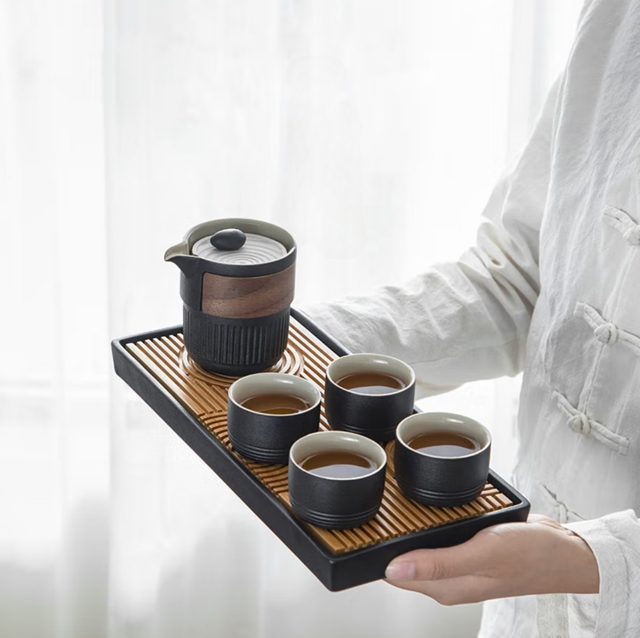
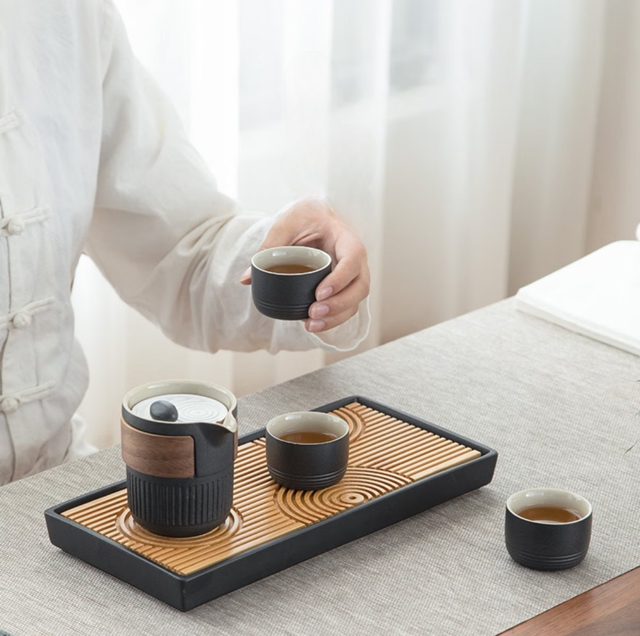
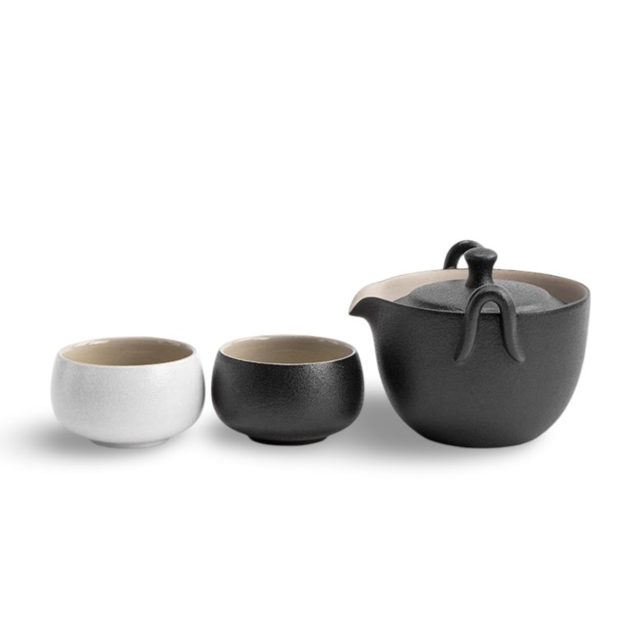
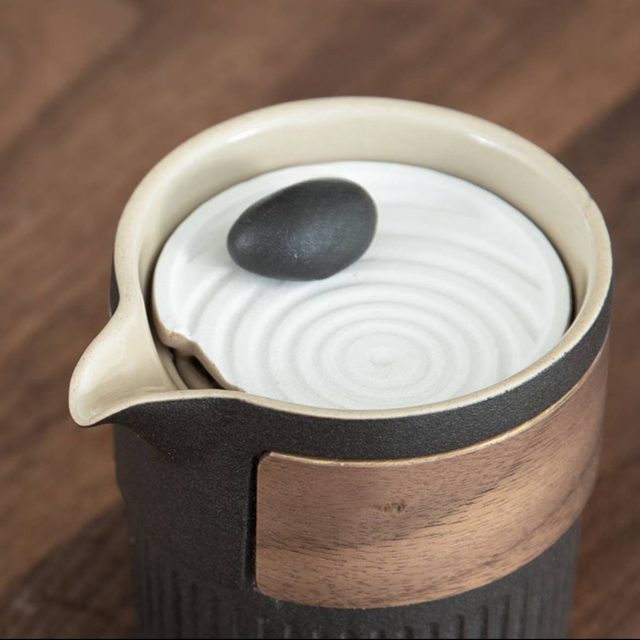
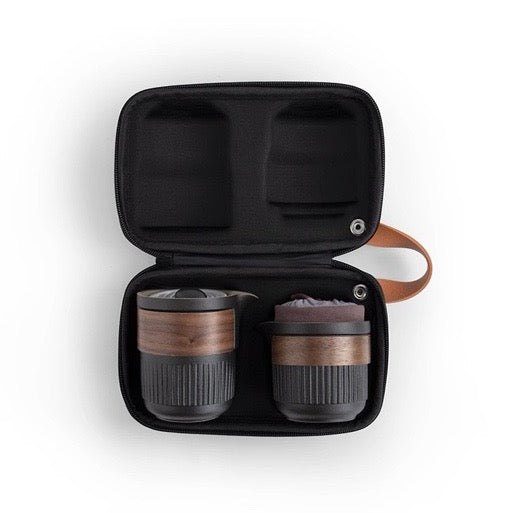
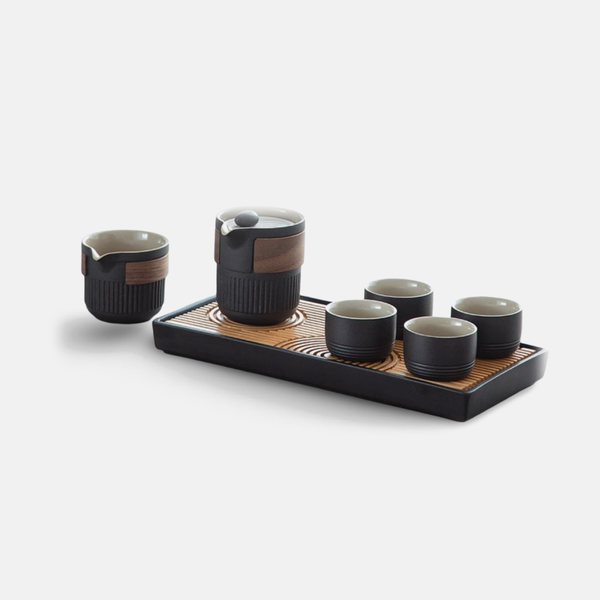
 Karesansui Tea Set€146.20
Eastern aesthetics at the tea table
Eastern aesthetics value what is quiet, natural and slightly imperfect. At the tea table, these ideas turn a simple cup into a small moment of attention.
You do not need a tea room to bring them home. A few considered objects, natural materials and some empty space are enough.
- 01
Simplicity and restraint
Chinese ink painting leaves part of the paper empty on purpose, a principle called liubai. At the table, the same idea means fewer, better objects: one pot, a few cups, a tray, and room to breathe around them.
- 02
Natural materials
Bamboo, wood, stone, glazed ceramics and clear glass bring texture and warmth. Their small irregularities, a grain in the wood or a pool of glaze, are part of their beauty.
- 03
Ink wash
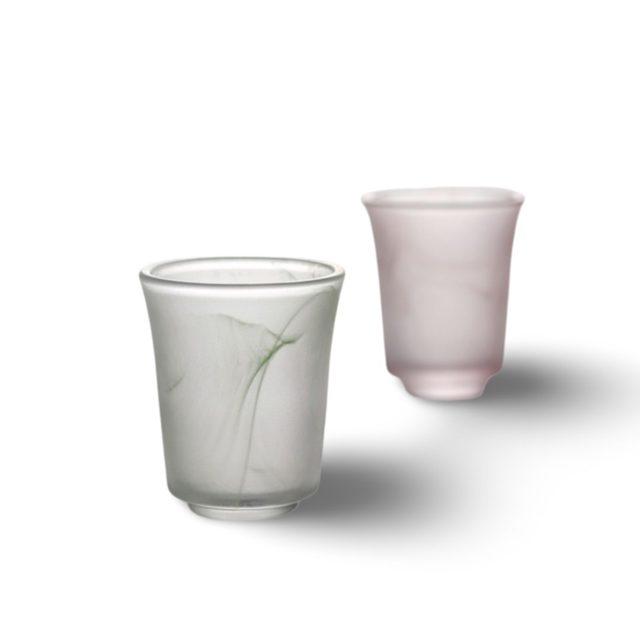
The soft greys and blacks of ink wash painting appear on porcelain cups and glass, suggesting mountains, mist and water in a few strokes. They pair well with a calm, black-and-white table.
- 04
Dry landscape gardens
Japanese karesansui gardens use raked gravel and a few stones to suggest water and islands. The same raked lines appear on tea trays, turning the tray itself into a small landscape.
- 05
Imperfection and time
The Japanese idea of wabi-sabi finds beauty in things that are simple, natural and marked by use. A cup that gains a patina, or a wooden tray that darkens over the years, becomes more personal with every pot of tea.
- 06
Bringing it home
Start with a clear surface and one tray. Choose teaware in two or three colours. Add one natural element: a branch, a stone or a single flower. Then make tea slowly, and let the objects do the rest.
Related products
Karesansui Tea Set€146.20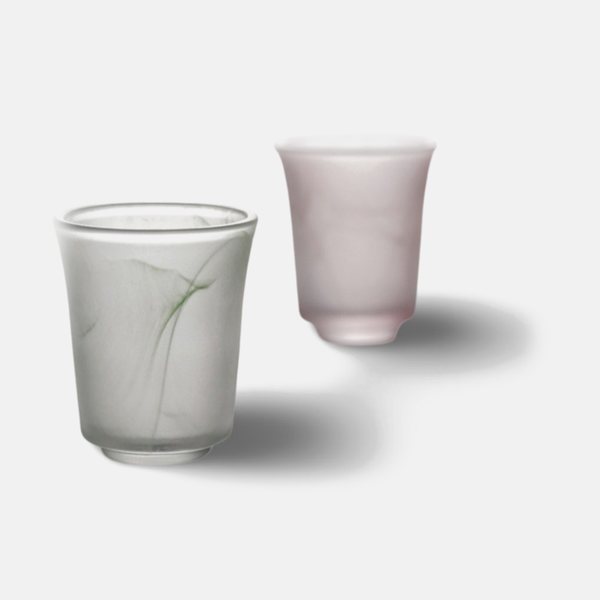 Coming soonInk Wash Glass Tumbler€12.98
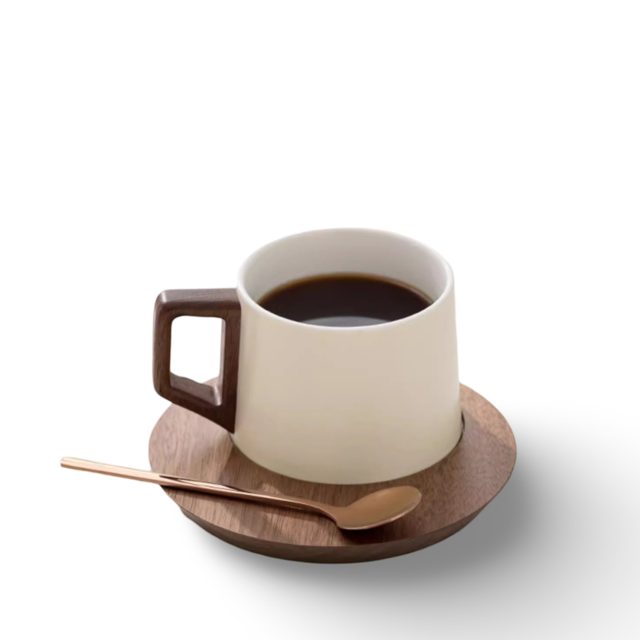
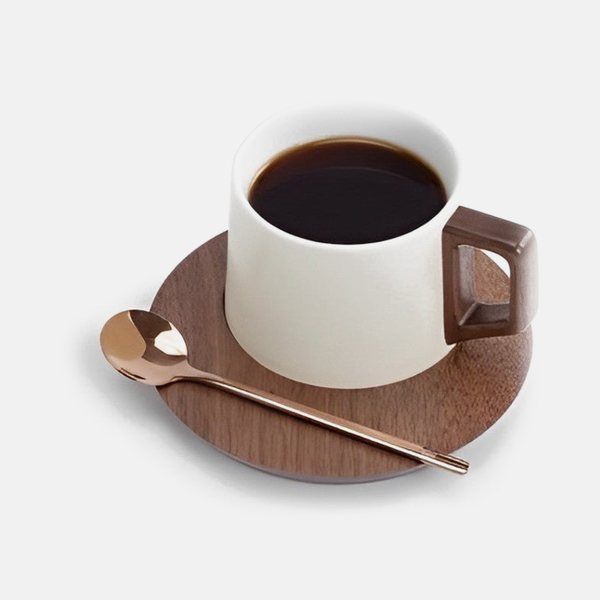 Coming soonHalf Sight Coffee Cup€29.98