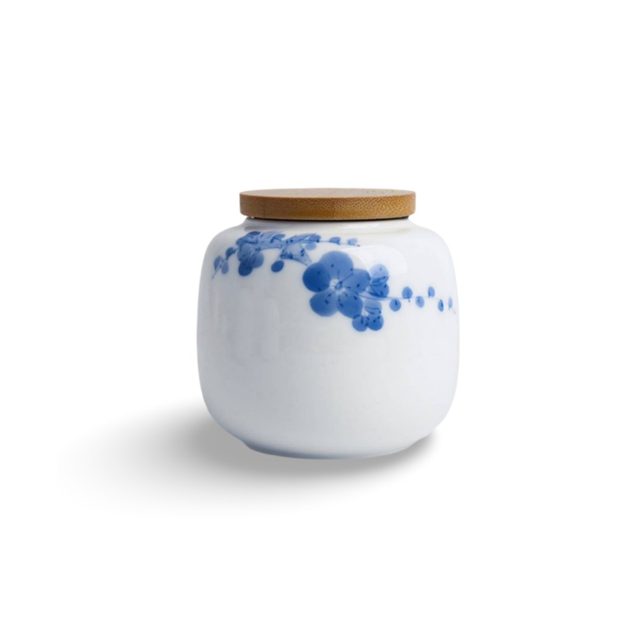
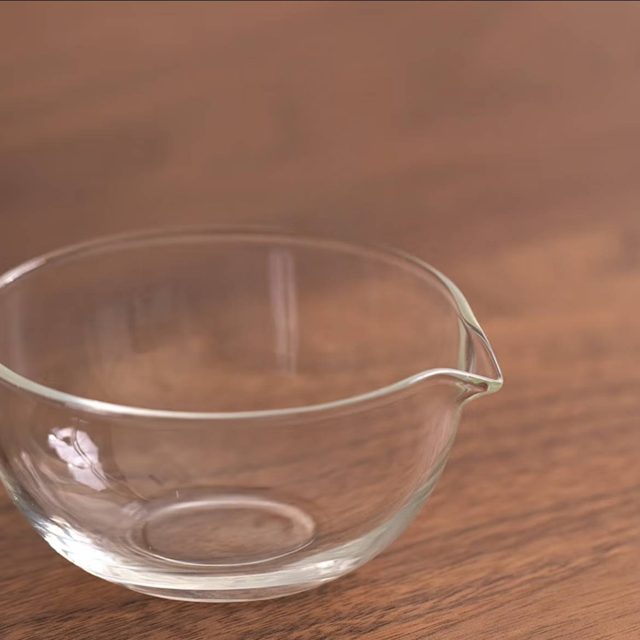
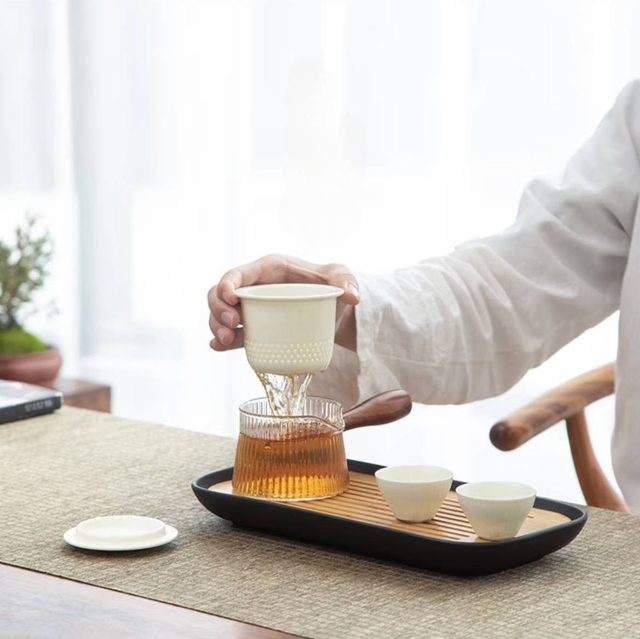
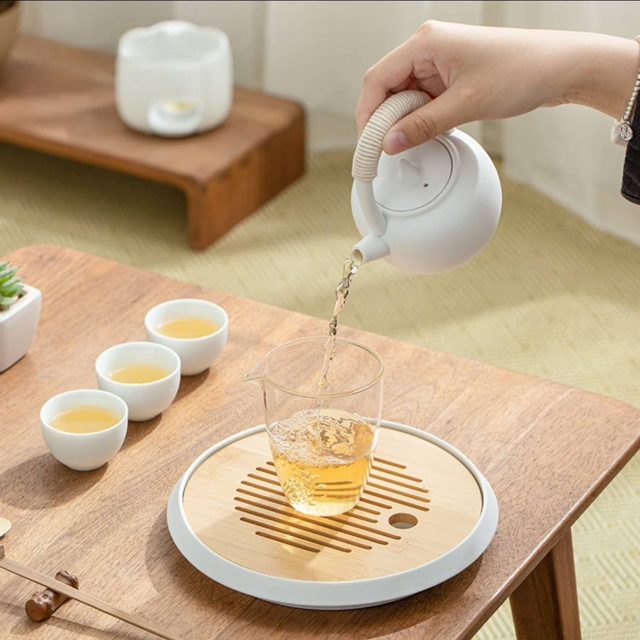
 Coming soonXiaoya Yunji Teapot Set€49.89
How to brew pu-erh tea
Pu-erh is a fermented tea from Yunnan in south-west China. Brewed with care it is smooth and deep, and good leaves give many infusions.
There are two styles. Raw (sheng) pu-erh is pressed soon after processing and changes slowly with age, from bright and lively to mellow. Ripe (shou) pu-erh goes through an accelerated fermentation, which gives a dark cup with earthy, woody notes from the start. Both are often pressed into cakes or bricks, and both can be brewed the same way.
- 01
Choose your teaware
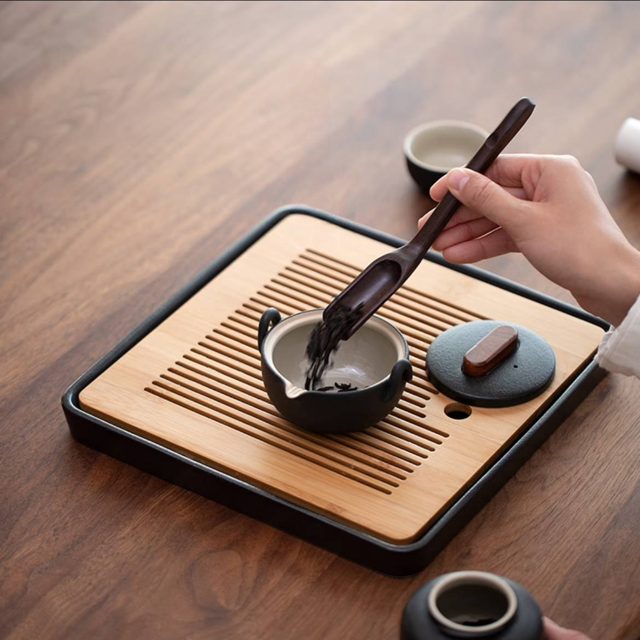
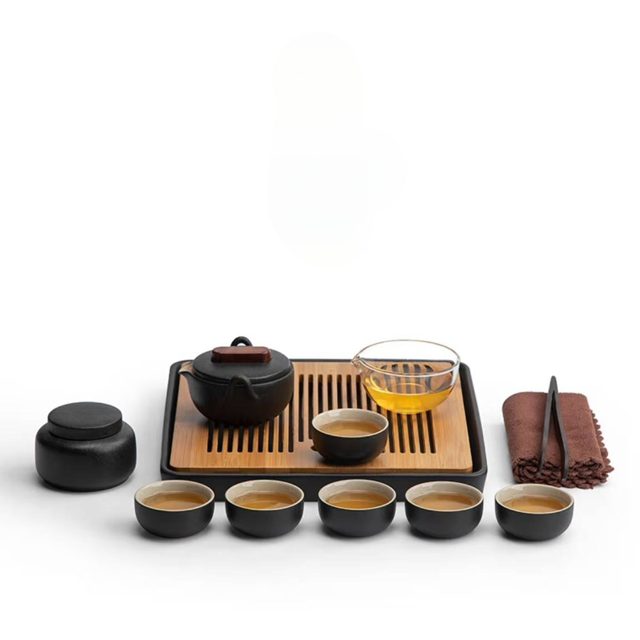
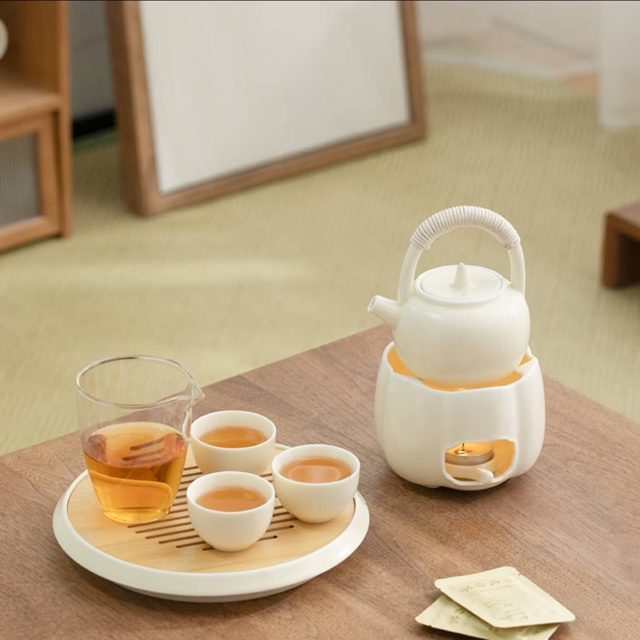
A small teapot or gaiwan of 100–150 ml lets you brew many short infusions. Porcelain and glass are neutral; unglazed clay softens the tea over time. A sharing pitcher and small cups complete the set; a tray keeps the table dry.
- 02
Break and weigh the leaves
Loosen a few grams from the cake with a pick or blunt knife, working with the layers rather than crushing them. A practical start for gongfu brewing is about 5–7 g of leaf per 100 ml of water. For one large mug, use 3–4 g in 300 ml.
- 03
Rinse first
Pour hot water over the leaves and discard it after a few seconds. The rinse wakes up compressed leaves and warms the teaware. Ripe pu-erh often benefits from a second quick rinse.
- 04
Water temperature
Pu-erh likes water just off the boil, around 95–100 °C. Freshly drawn, soft water gives the clearest taste.
- 05
Infusion times
For gongfu brewing, start with 10–15 seconds and add 5–10 seconds with each infusion. Good leaves give eight infusions or more. For one large mug, steep 3–5 minutes and adjust to taste. The pack of your tea may give its own guidance; follow that first.
- 06
Store it well
Keep pu-erh away from light and strong smells, in a cool, dry place with a little air, such as a paper wrapper inside a cupboard. Avoid the fridge and airtight plastic for long-term storage.
Related products
Coming soonXiaoya Yunji Teapot Set€49.89 Dongli Tea Set with Tray€69.98
 Coming soonOriental Leaves Premium Teafrom €17.98